
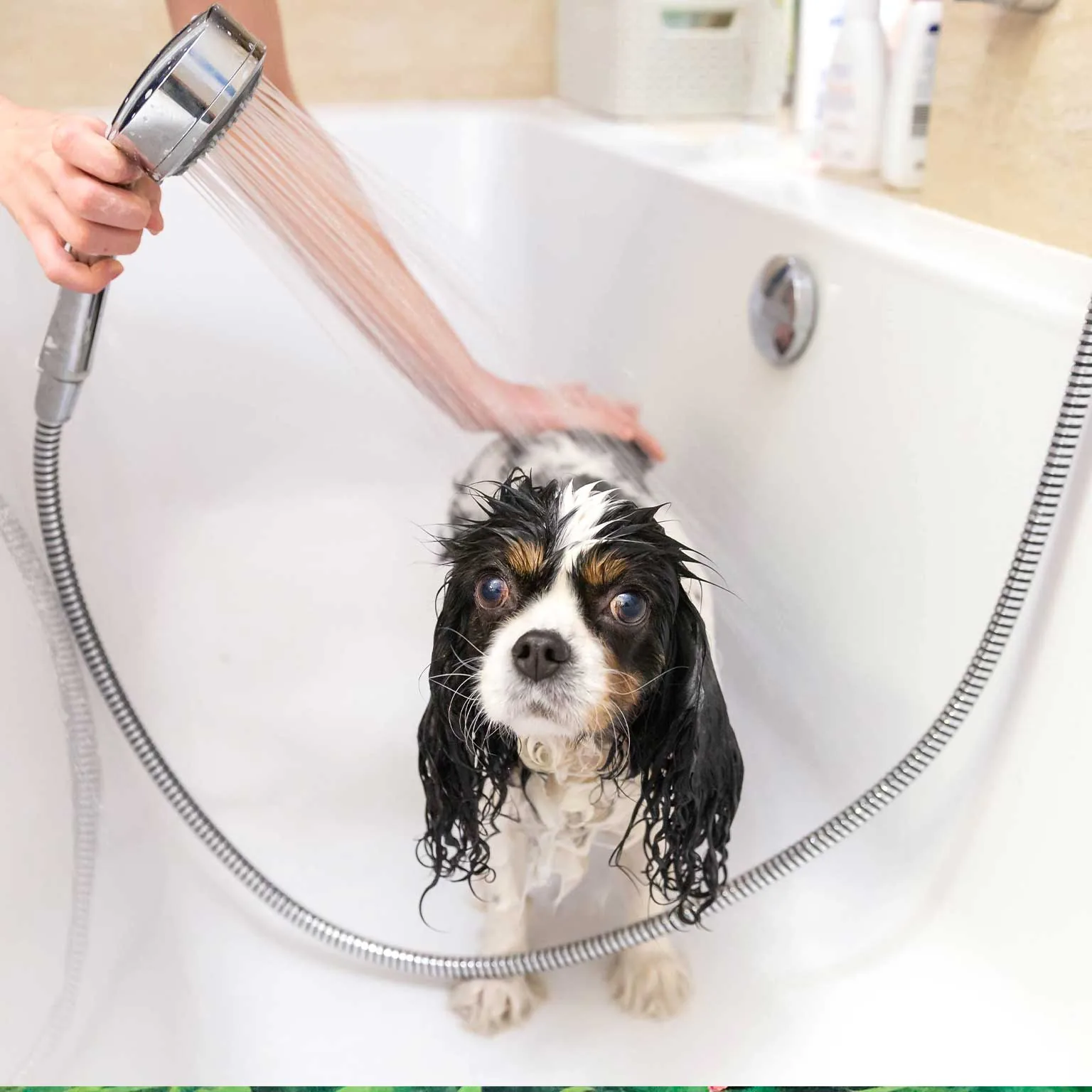
Summer Skin Allergies and Hot Spots in Dogs: A Groomer's GuideAlergias de pele e hot spots no verão: o guia da groomer
Why August is peak hot spot season herePor que agosto é o pico de hot spots por aqui
Three things stack up at the same time in the Merrimack Valley: high humidity, peak grass and ragweed pollen, and dogs swimming or getting hosed off in the yard. A dog that goes into the water and is not dried down to the skin can develop a hot spot within hours, because warm moisture against the skin is exactly what bacteria need.Três fatores se somam ao mesmo tempo no Merrimack Valley: umidade alta, pico de pólen de grama e ambrósia, e cães nadando ou sendo lavados no quintal. Um cão que entra na água e não é seco até a pele pode desenvolver um hot spot em poucas horas, porque umidade morna junto à pele é exatamente do que as bactérias precisam.
How to tell a hot spot from a normal irritationComo diferenciar hot spot de uma irritação comum
- It appears suddenly and grows fast, often overnight.
- The skin is bright red, warm, wet and often has matted hair stuck to it.
- The dog licks, chews or scratches that one place obsessively.
- Common locations: cheeks and neck, the hips, the base of the tail, and behind the ears.
- Aparece de repente e cresce rápido, muitas vezes de um dia para o outro.
- A pele fica bem vermelha, quente, molhada e frequentemente com pelo grudado.
- O cão lambe, morde ou coça aquele ponto de forma obsessiva.
- Locais comuns: bochechas e pescoço, quadris, base da cauda e atrás das orelhas.
What grooming does to prevent themO que o banho e tosa faz para prevenir
- Full dry, every time. We blow the coat dry to the skin, not just the surface. This is the single biggest preventive step in summer.
- Mat removal. A mat is a damp, airless pocket against the skin. It is a hot spot waiting to happen.
- Gentle, pH correct shampoo. Human shampoo and harsh products strip the skin barrier and make allergies worse.
- Rinsing off allergens. A bath every two to four weeks in pollen season physically removes what is sitting on the coat and paws.
- Early detection. On the table we see the skin. Many owners first learn about a developing hot spot from us.
- Secagem completa, sempre. Secamos a pelagem até a pele, não só a superfície. Esse é o passo preventivo mais importante no verão.
- Remoção de nós. Um nó é uma bolsa úmida e sem ar colada à pele. É um hot spot esperando para acontecer.
- Shampoo suave e com pH correto. Shampoo humano e produtos agressivos danificam a barreira da pele e agravam as alergias.
- Enxágue dos alérgenos. Um banho a cada duas a quatro semanas na temporada de pólen remove fisicamente o que fica na pelagem e nas patas.
- Detecção precoce. Na mesa nós vemos a pele. Muitos tutores ficam sabendo por nós que um hot spot está se formando.
After the river, the pool or the sprinklerDepois do rio, da piscina ou do sprinkler
If your dog swims in the Merrimack or plays in a sprinkler in Pawtucketville, do this before letting them nap: towel hard, then dry with air, paying attention to the armpits, groin, chest, ears and the area under the collar. Take the collar off until the neck is dry. Those are the spots owners skip and where hot spots start.Se o seu cão nada no Merrimack ou brinca no aspersor de jardim em Pawtucketville, faça isso antes de deixá-lo dormir: seque bem com toalha e depois com ar, prestando atenção nas axilas, virilha, peito, orelhas e na região sob a coleira. Tire a coleira até o pescoço secar. Esses são os pontos que os tutores esquecem e onde os hot spots começam.
When to call the vetQuando ligar para o veterinário
Call the same day if the area is larger than a quarter, is oozing or bleeding, smells strong, or if your dog is in enough pain that they will not let you touch it. Hot spots usually need a clip around the area, cleaning and a prescription. We are happy to shave the area and clean it as part of the plan, but the medication has to come from your vet.Ligue no mesmo dia se a área for maior que uma moeda, estiver secretando ou sangrando, tiver cheiro forte, ou se o cão sentir dor a ponto de não deixar você encostar. Hot spots normalmente exigem tosa ao redor, limpeza e medicação prescrita. Podemos tosar e limpar a região como parte do plano, mas o medicamento precisa vir do seu veterinário.
Book with CatDog Grooming SalonAgende no CatDog Grooming Salon
Dog and cat grooming in Lowell, MA, rated 5.0 on Google. See our services or book an appointment. We serve you in English and Portuguese.Banho e tosa de cães e gatos em Lowell, MA, nota 5.0 no Google. Veja nossos serviços ou agende um horário. Atendemos em inglês e português.
Book an appointmentAgendar horárioKeep readingContinue lendo
Frequently asked questionsPerguntas frequentes
Can I treat a hot spot at home?Posso tratar hot spot em casa?
You can keep the area clean and dry and stop the licking with a cone, but most hot spots need a vet to clip, clean and prescribe treatment. Home remedies often trap moisture and make it worse.Você pode manter a área limpa e seca e impedir a lambida com colar elizabetano, mas a maioria dos hot spots precisa de veterinário para tosar, limpar e prescrever tratamento. Receitas caseiras costumam prender umidade e piorar.
Does a summer haircut help with allergies?A tosa de verão ajuda nas alergias?
It can, because a shorter coat holds less pollen and dries faster. It works best combined with regular baths that rinse allergens off the skin and paws.Pode ajudar, porque uma pelagem mais curta retém menos pólen e seca mais rápido. Funciona melhor combinada com banhos regulares que retiram alérgenos da pele e das patas.
How often should an allergic dog be bathed in summer?Com que frequência banhar um cão alérgico no verão?
Many allergic dogs do well with a bath every one to two weeks during pollen season, using a gentle or medicated shampoo recommended by your vet.Muitos cães alérgicos vão bem com banho a cada uma ou duas semanas na temporada de pólen, com shampoo suave ou medicamentoso indicado pelo veterinário.
